Ten years after the murder of environmental defender Berta Cáceres, we take a look at the report issued by the Interdisciplinary Group of Independent Experts (GIEI Honduras). This report, based on a human rights perspective as well as testimonial evidence, files, and telecommunications, confirms that the femicide of the Lenca defender was carried out by hitmen, planned by high-up corporate executives, financed by international development banks, and covered up by the Honduran state.
Berta Isabel Cáceres Flores, defender of the Gualcarque River and founder of the Civic Council of Popular and Indigenous Organizations of Honduras (COPINH), was murdered in March 2016. Cáceres resisted the building of the Agua Zarca dam, owned by the company Desarrollos Energéticos S.A. (DESA). The project was conceived and sustained by a corrupt network, with illegal concessions granted by the Honduran government and without free, prior and informed consultation with the inhabitants of the territory, the Lenca Indigenous People.
Currently, eight people have been convicted for this crime, including David Castillo, president of DESA, who ordered the murder. The remaining convicted individuals are company officials and former military commanders, most of them identified as perpetrators. Among them is Major Mariano Díaz Chávez, who also coordinated drug trafficking operations and supplied weapons, logistics, and personnel, taking advantage of his military rank.
The GIEI Honduras, formed by mandate of the Inter-American Commission on Human Rights (IACHR), determined that Cáceres’ murder was “carried out through a complex criminal architecture that brought together economic interests, international financing, security structures, institutional corruption, and serious State omissions.”
This report proves that the crime was foreseeable and preventable. Berta Cáceres reported more than 30 threats before she was murdered. Intelligence reports also reveal a previous assassination attempt. The report also confirms that investigations were obstructed, including the persecution of individuals.
The GIEI Honduras report also reveals the manipulation of evidence and the coercion of witnesses, as well as threats and harassment against prosecutors and investigators. All of this was done to protect senior DESA executives, members of an economic elite that had already taken over the Honduran state with the consent and collaboration of then-president Juan Orlando Hernández, who was later prosecuted for drug and arms trafficking in the United States, and subsequently pardoned and promoted by US President Donald Trump.
In addition, the report confirms that the murder was financed through the diversion of funds from loans granted by international development banks such as the Central American Bank of Economic Integration (CABEI) and the Netherlands Development Bank (FMO) for the Agua Zarca project. The investigation shows that more than 60% of the funds, equivalent to approximately US$ 12 million, were diverted and/or mismanaged.
These funds were used to finance intelligence operations, logistics, and payments to hired killers, as well as payments to journalists, lawyers, informants, police officers, and public officials. The GIEI concluded that the majority shareholders of the Agua Zarca project played key roles in the plan that culminated in the murder of defender Berta Cáceres, specifically Jacobo, José Eduardo, Pedro, and Daniel Atala. None of them have been investigated to date. Even today, these individuals are carrying out hate attacks against COPINH and Berta Cáceres’s family.
Regarding the impacts of the crime, the report states that “the harms resulting from the murder of Ms. Berta Cáceres and from the conflict associated with the Agua Zarca project are multiple, differentiated, and of both individual and collective nature.”
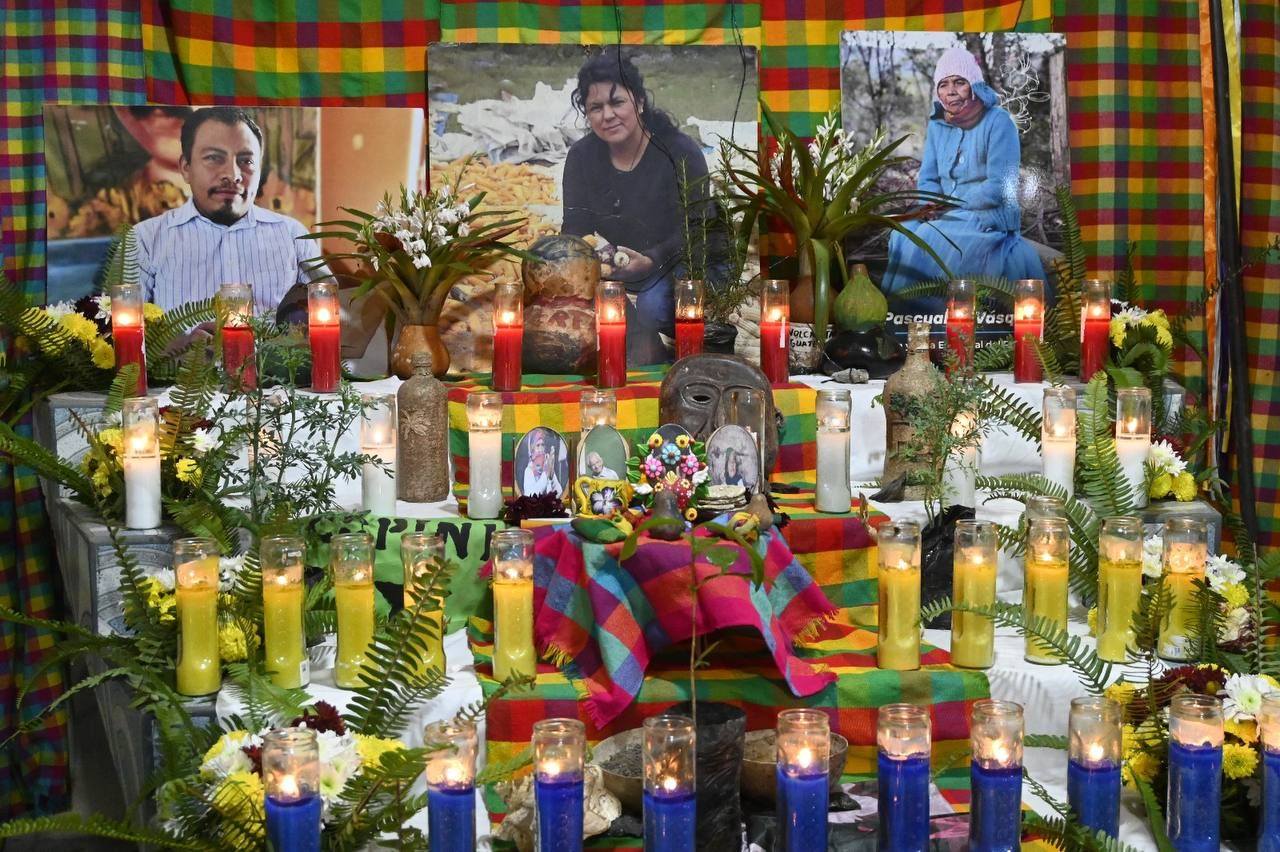
Based on its findings, the GIEI’s recommendations to the Honduran State include: the revocation and permanent dismantling of the Agua Zarca project; the dissolution and liquidation of DESA; and the titling and demarcation of the Lenca ancestral lands in Rio Blanco. Additionally, the GIEI calls for the creation of health care and education assistance programs, a public act of acknowledgement of responsibility by the State, and the building of a memorial honouring the life of Berta Cáceres.
The GIEI also urges the opening of intelligence files; the investigation of financing banks; the continuation and deepening of criminal investigations addressing co-perpetration and related crimes; the investigation of the responsibility of public officials who facilitated or committed the crime; comprehensive reform of the Public Prosecutor’s Office; national protection mechanisms; and laws to modernise the criminal justice system.
Currently, the structures that made Berta Cáceres’ murder possible ten years ago remain intact. This report provides information and evidence so that the Prosecutor’s Office can prosecute the co-perpetrators who have yet to be brought to justice, the high-ranking officials who have so far enjoyed total impunity.
*****
Real World Radio stands with COPINH and its struggles, and we are committed to keeping the memory of Berta Cáceres alive as an inspiration for current and future struggles.