CHALLENGING POWER THROUGH A FEMINIST AND JUST ENERGY TRANSITION
Energy to nurture and sustain life, not annihilate it
The debate over what kind of energy transition we want is more urgent today than ever. We are living in a moment marked by the rise of the far right, escalating wars, genocide, militarism, blockades, and new forms of colonialism that seek to secure control over territories, energy sources and the commons. In this context, major powers and corporations are reinforcing a model that prioritises accumulation, plunder and the concentration of wealth, while shifting their costs onto peoples, especially in the Global South.
At the same time, the climate crisis is rapidly worsening as a result of an energy system based on fossil fuels, extractivism, and a logic of consumption that serves the market rather than life. To speak of a just transition today means challenging the way out of this crisis: not accepting false solutions or greenwashing for the same model of dispossession, but instead driving deep transformations that place social, environmental, economic and gender justice at the centre.
For a just transition to be feminist, the sustainability of life must be at the centre, and we must challenge the multiple forms of oppression that uphold the current energy system. From a grassroots feminist perspective, energy is not understood as a commodity but as a right linked to care and the reproduction of life. This perspective highlights how the dominant energy model is sustained by structural inequalities and how its impacts fall disproportionately on women.
A feminist and just energy transition also involves challenging the power dynamics that shape the energy system, which is currently controlled by transnational corporations that exert pressure on governments and undermine democracies. It is not simply a matter of changing energy sources, but of transforming the model: strengthening social participation, democratising decision-making, and advancing towards energy systems under public control and oriented towards the common good.
From the ground up and without fossil fuels
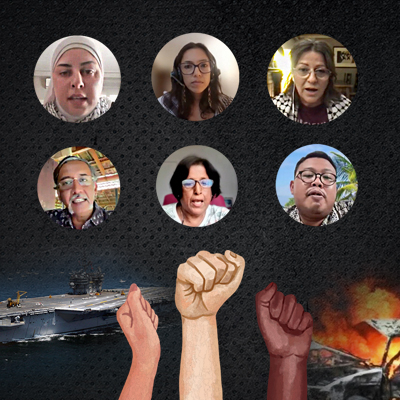
In this context, and in the lead-up to the First Conference on Transitioning Away from Fossil Fuels held in late April in Santa Marta, Colombia, a webinar titled “Perspectives on a Feminist and Just Energy Transition” took place. The event, organised by Friends of the Earth International (FoEI), aimed to deepen the debate and strengthen the alliances built among social movements, picking up on the process launched at the Peoples’ Summit in Belém, where a just, grassroots and inclusive transition was central to the discussion.
The webinar included the participation of organisations and leaders from across continents and sectors, including the World March of Women and the Trade Union Confederation of the Americas, reaffirming that a just transition is a shared agenda built through collaboration among feminist, labour, environmental and grassroots movements.
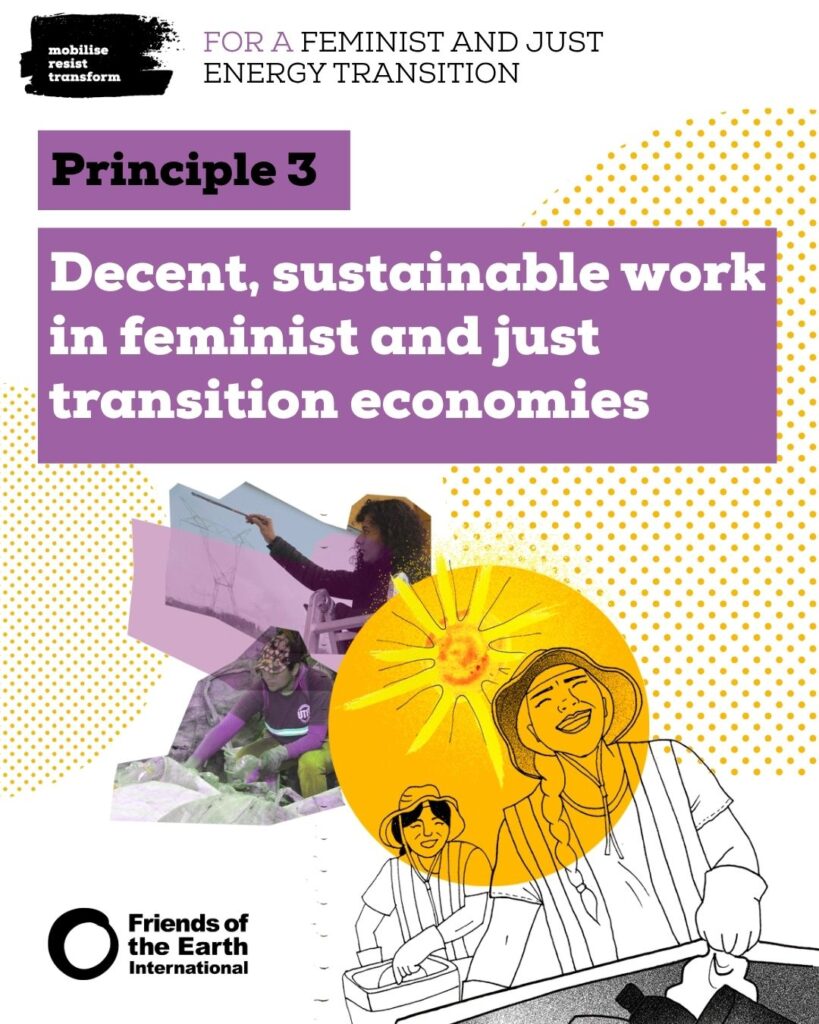
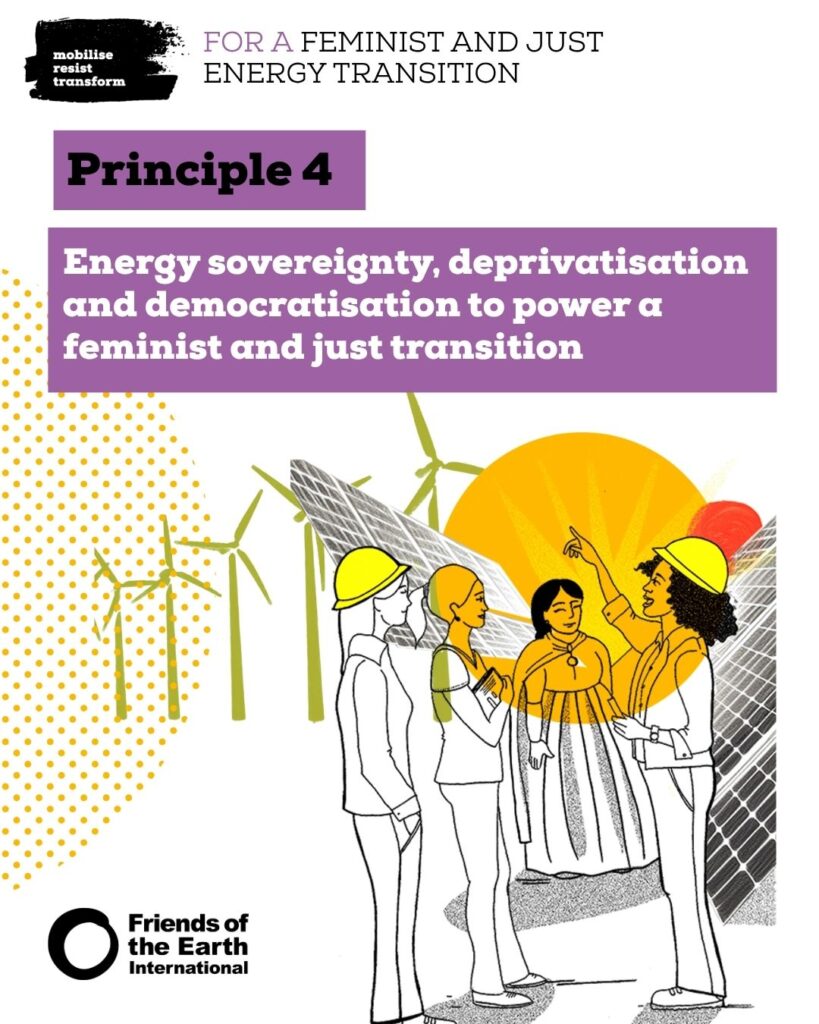
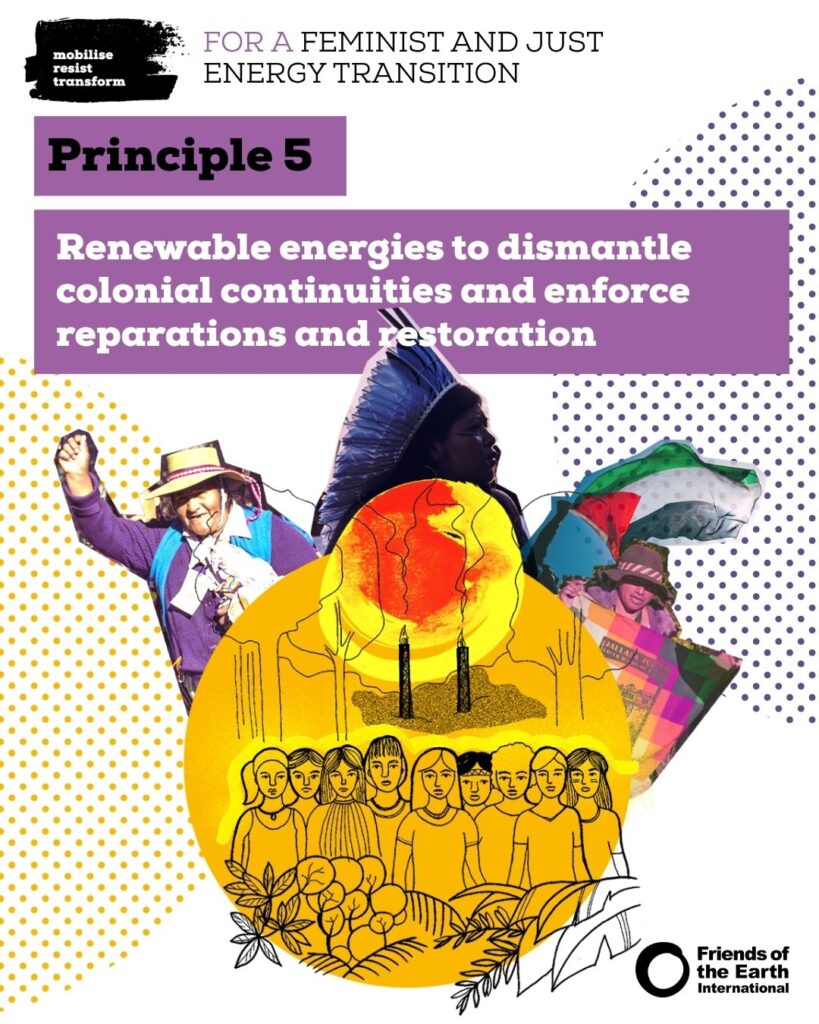
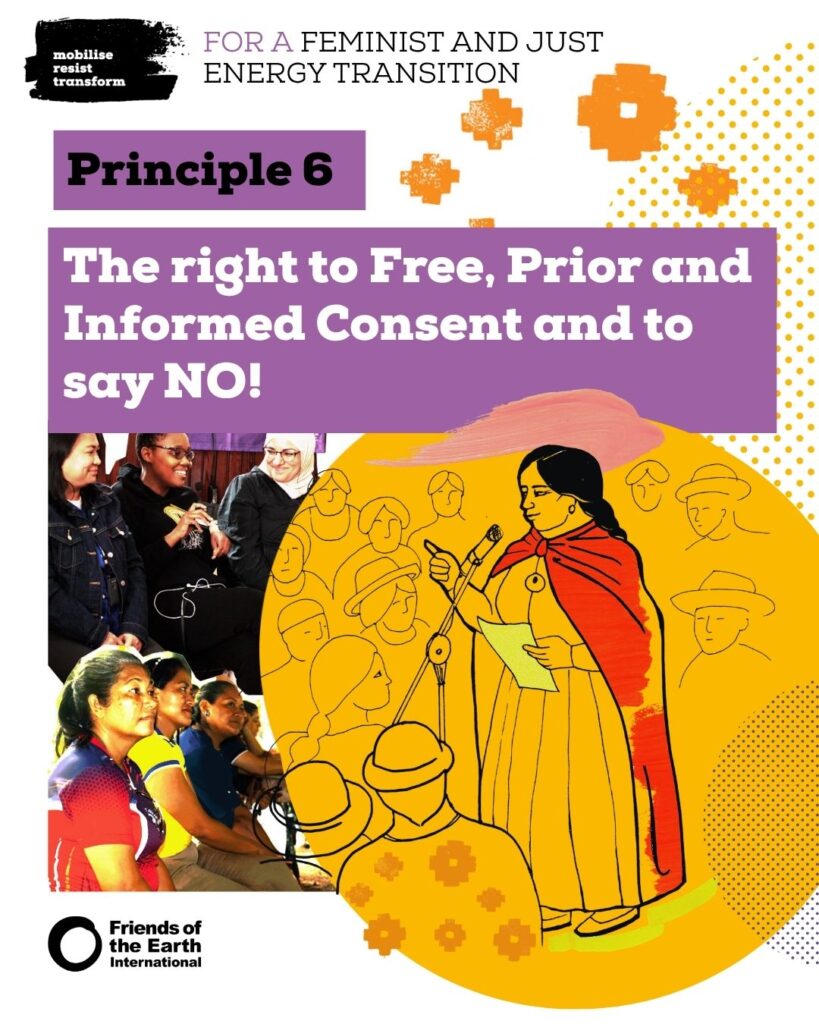
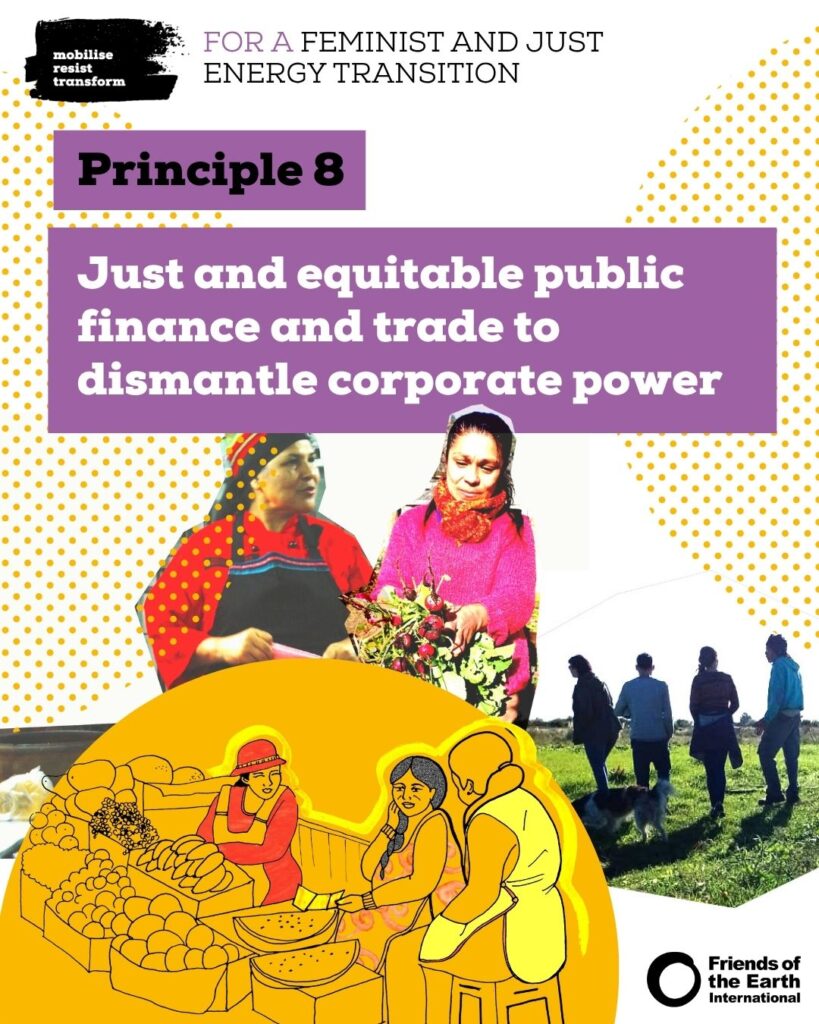
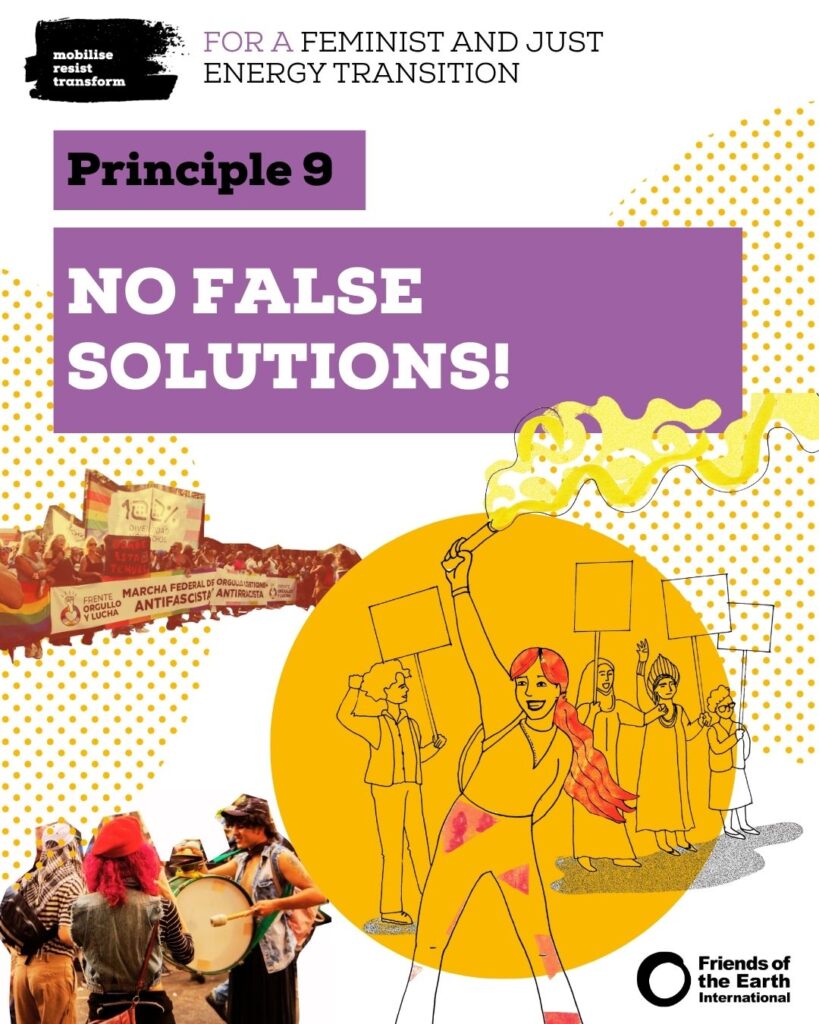
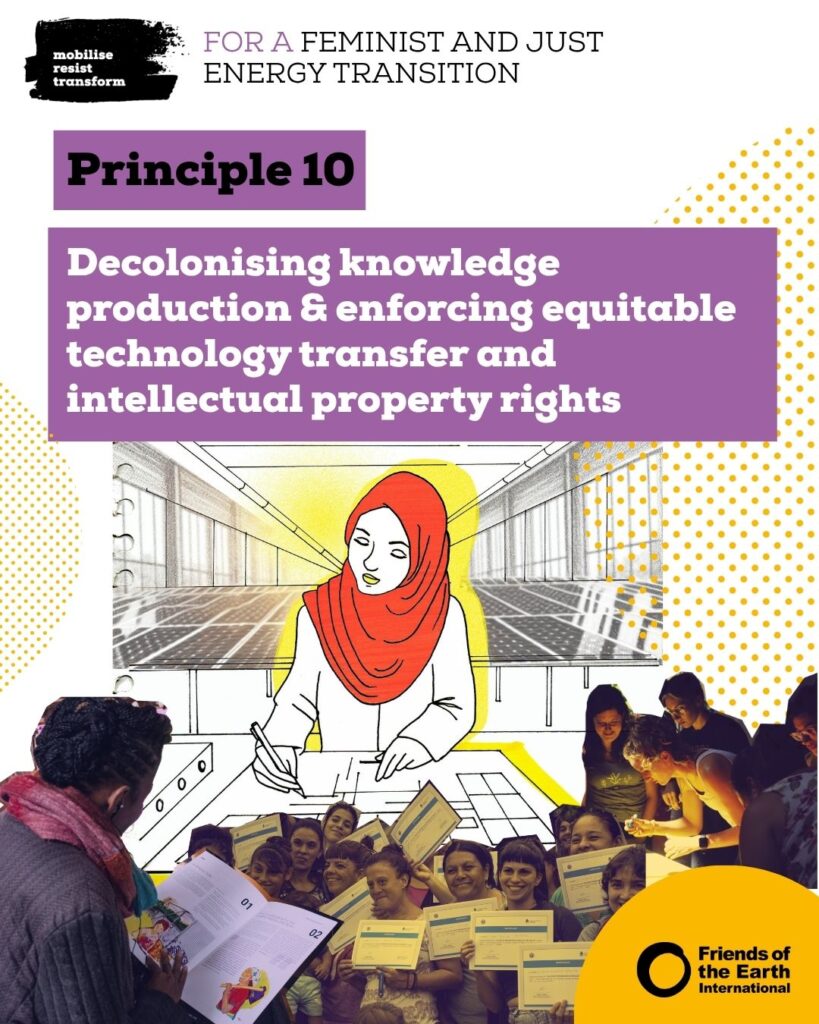
FoEI promotes the perspective of a feminist and just energy transition as part of this collective process, built together with allied organisations. This has been summarised into a proposal based on ten principles that guide the transformation of the energy system from the perspective of social, environmental, economic and gender justice.
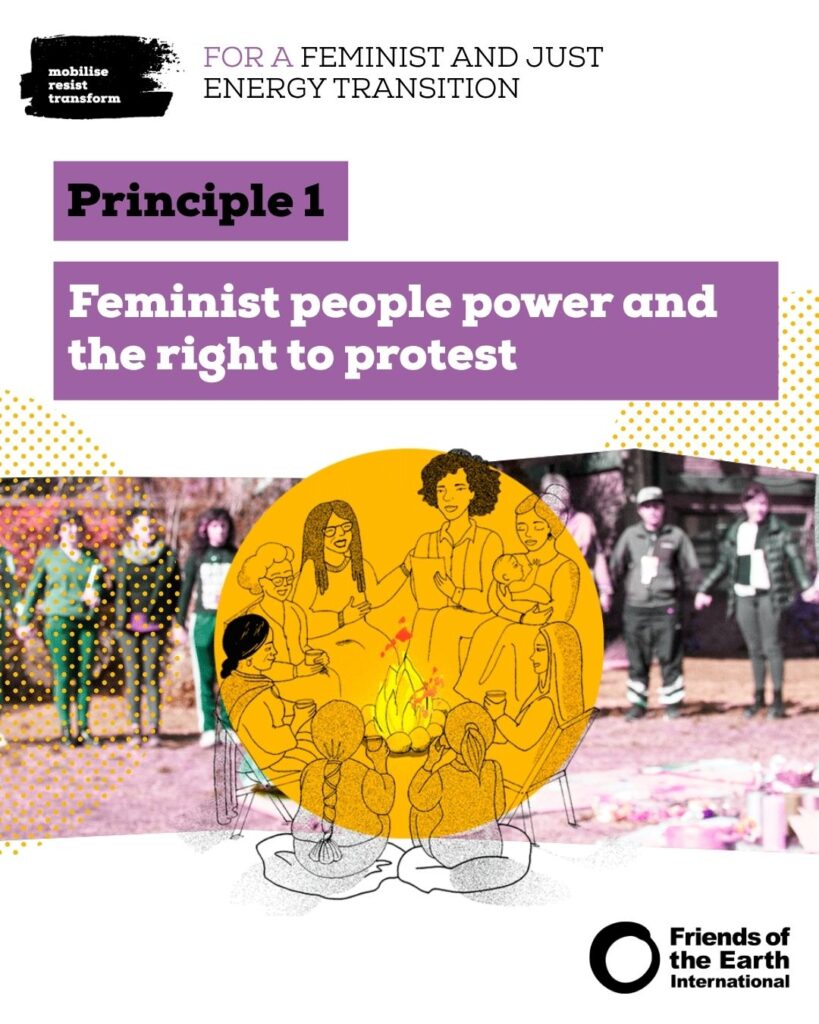
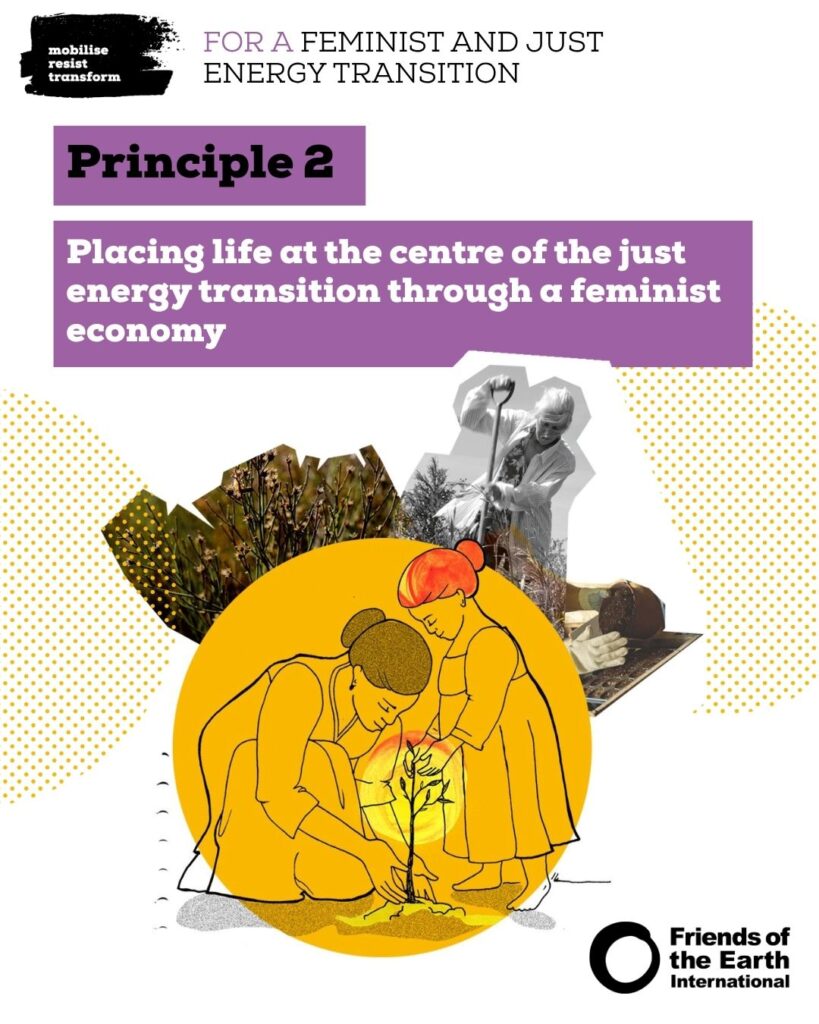
Lise Masson, a member of FoEI, warned that many of the so-called “green transitions” are reproducing new forms of extractivism, becoming false solutions that leave the power dynamics of the energy system intact. She also pointed to the corporate capture of the debate on just transition and raised key questions: for what, for whom, and where does the energy come from? In this context, she presented the ten principles for a feminist and just energy transition, which aim to decentralise energy systems, curb extractivism and prevent the transition from reproducing the consumption model of the Global North.
During the webinar, Sophie Ogutu, a member of the World March of Women Kenya, highlighted that solutions to crises are built from the ground up, where people are often compelled to organise and develop alternatives at the local level to sustain their own lives, those of their families and their communities. “When we talk about a just transition, we are talking about protecting life and the systems that make it possible. Not about replacing one form of exploitation with another,” she stated.
This approach, deeply rooted in a feminist economy, places at its core the recognition and redistribution of care work, that made invisible the labour that sustains life and has historically fallen on women. For Ogutu, the path must lead from exclusion to participation: “If we aren’t invited to the table, we must grab a chair and sit down at the table, without violence, but with determination.” She also highlighted the need to move from fragmentation to intersectionality. The feminist activist left us with two ideas that resonated throughout the webinar: “A feminist and just transition challenges power” and “feminist leadership is collective.”
In motion and for life
The articulation among social movements was the focus of the presentation by Natalia Lobo, a member of the World March of Women Brazil, who highlighted that the energy debate is directly linked to environmental racism, food sovereignty and the internationalism of peoples. The just transition, she claimed, “is a broad political endeavour. It is a shared agenda and a political alliance, not a technical issue that can be co-opted.”
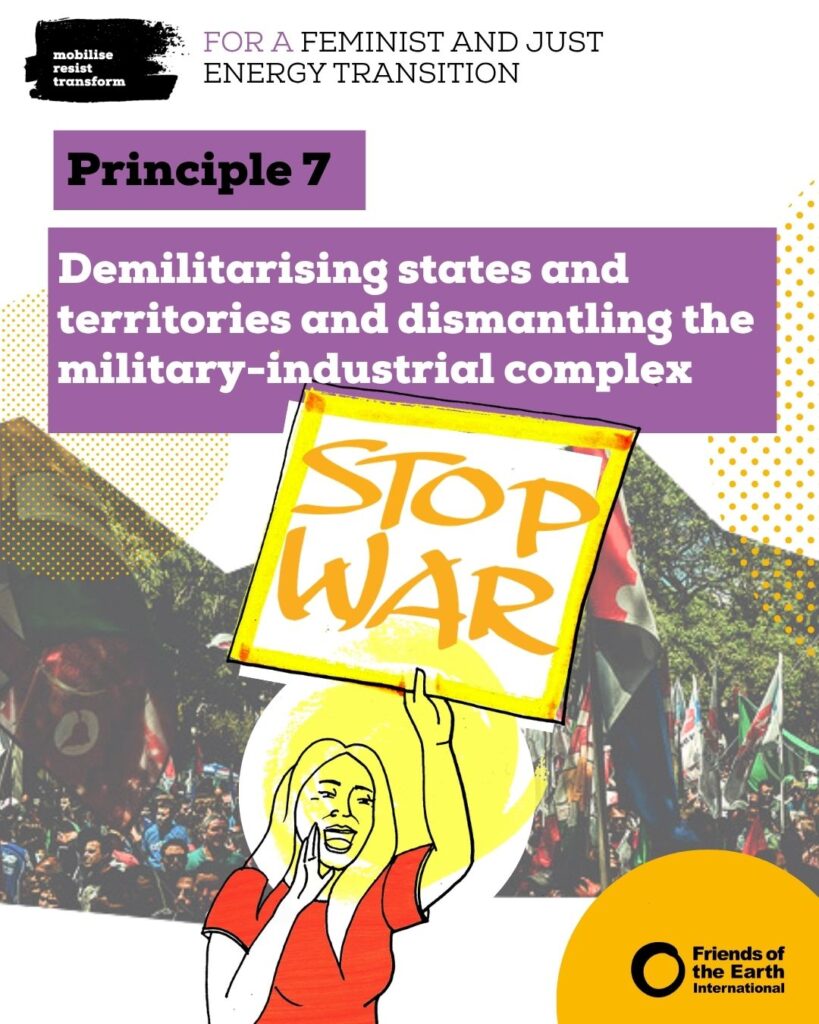
Lobo also noted that wars and militarisation reinforce an unjust market-driven energy system, which deepens energy poverty in the Global South. In this regard, she proposed demilitarisation as a central element and reaffirmed that “energy must be a common good in favour of life. A right at the service of the reproduction of life and not at the service of death, of big tech companies, and of war.”
From Friends of the Earth Asia Pacific (APAC), Rasha Abu Dayyeh highlighted that the just transition is not a theoretical discussion, but a matter of survival linked to access to energy, water and food in contexts of occupation and war. She explained that the destruction of energy infrastructure and control over natural resources deepens inequality and increases the burden of unpaid labour on women. “Just transition and social justice are inseparable. If it does not guarantee rights or provide redress to those who have been affected, it is not just.”
Furthermore, the APAC representative highlighted that the transition also involves sovereignty and independence. This view is shared by the various organisations that participated in the webinar, which also agreed on the need to challenge the dominant energy model, strengthen community participation and build democratic alternatives that ensure rights.
From the trade union movement, the importance of ensuring that the energy transition includes decent work and social justice was highlighted, while organisations from the Global South stressed the urgency of curbing extractivism and false solutions.
Iván González, from the Trade Union Confederation of the Americas, highlighted that a just transition must be built with workers at the forefront, in the face of an energy system dominated by financialisation, the commodification of common goods and corporate power. He also highlighted the need to challenge the role of the state and move towards sovereign control of energy, citing as an example processes where the energy transition is linked to collective responses to blockades and crises, such as the case of Cuba
– If you would like to learn more about the Feminist and Just Energy Transition, we recommend reading and/or listening to this report and watching this video –